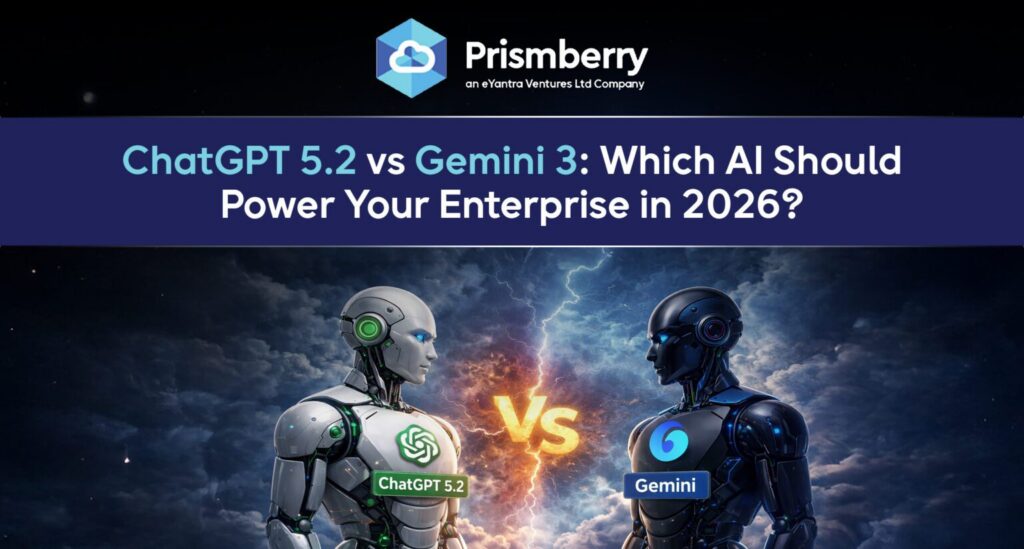
The enterprise AI landscape has evolved dramatically, and 2026 marks a pivotal moment for businesses evaluating their AI infrastructure. With OpenAI’s ChatGPT 5.2 and Google’s Gemini 3 leading the charge, the stakes have never been higher. Both platforms promise unprecedented capabilities, but which one truly deserves a place in your enterprise stack?
Let’s cut through the marketing noise and examine what these AI powerhouses actually deliver for businesses today.
The Performance Battleground
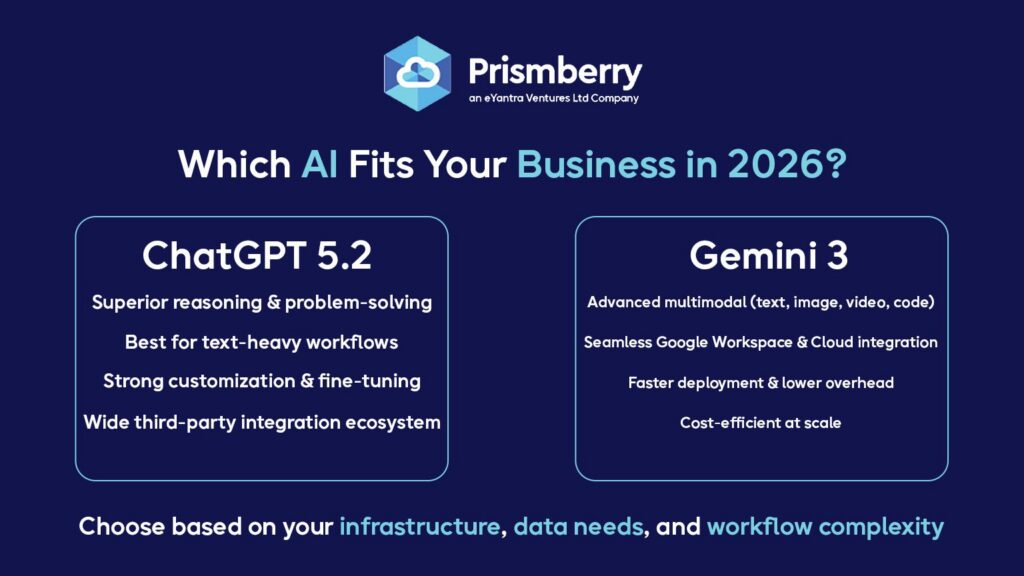
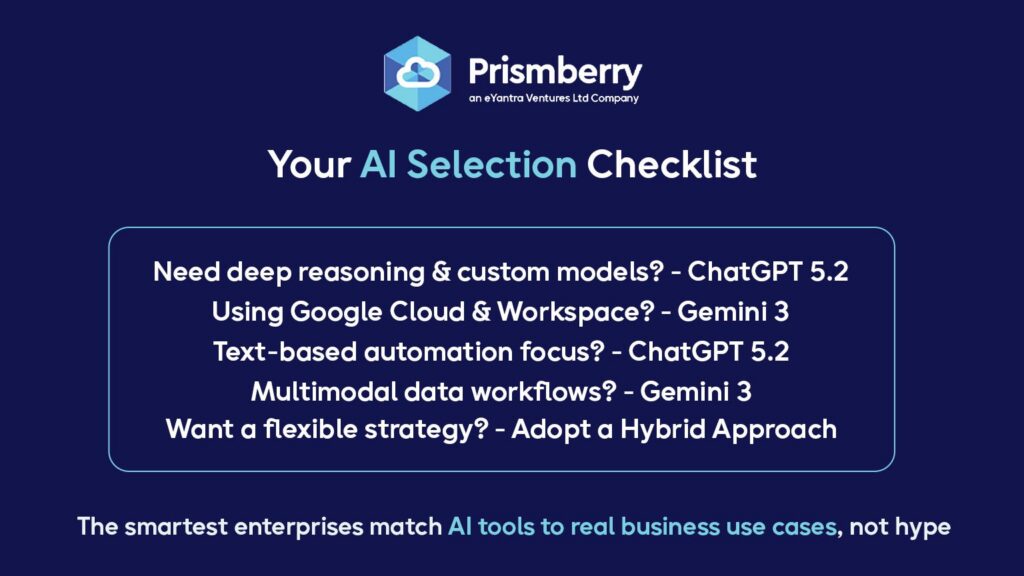
ChatGPT 5.2 has made significant strides in reasoning capabilities. OpenAI’s latest iteration excels at complex problem-solving tasks, making it particularly valuable for strategic planning, legal document analysis, and technical troubleshooting. The model demonstrates impressive consistency across multi-step workflows, which matters when you’re automating critical business processes.
Gemini 3, on the other hand, leverages Google’s massive infrastructure advantage. Its multimodal capabilities feel more mature and integrated. The ability to seamlessly process text, images, video, and code in a single context window isn’t just impressive on paper. It translates to real productivity gains when your teams are analyzing market research videos, extracting insights from presentation decks, or reviewing product demonstrations.
For pure text-based tasks like content generation, customer service automation, and data analysis, both platforms perform admirably. The differences become apparent when you push beyond conventional use cases.
Integration and Ecosystem Advantages
Google’s Gemini 3 benefits from its tight integration with the broader Google ecosystem. If your enterprise already relies on Google Workspace, BigQuery, or Google Cloud Platform, Gemini 3 slots in naturally. The ability to query your organization’s data across Drive, Gmail, and other Google services without extensive API development saves considerable implementation time.
ChatGPT 5.2 counters with OpenAI’s extensive partner ecosystem. The API-first approach means you’ll find more third-party tools, plugins, and enterprise applications built specifically for ChatGPT integration. This matters if you’re running specialized industry software or custom-built platforms that need AI capabilities bolted on.
Both platforms now offer enterprise-grade security features, including data isolation, compliance certifications, and admin controls. However, Google’s experience managing enterprise data at scale gives Gemini 3 a subtle edge in organizations with stringent data governance requirements.
Cost Considerations That Actually Matter
Pricing structures for enterprise AI have become increasingly complex. ChatGPT 5.2 follows a token-based model that’s straightforward but can become expensive at scale, particularly for applications involving lengthy documents or extensive context requirements.
Gemini 3 offers more flexible pricing tiers, including volume discounts that benefit large-scale deployments. Google’s compute infrastructure also means potentially lower costs for intensive workloads, though your actual expenses will vary based on specific use cases.
The hidden costs matter too. Consider training requirements for your team, API development time, and ongoing maintenance. ChatGPT’s widespread familiarity means your employees likely already understand how to interact with it effectively, reducing onboarding time.
Real-World Enterprise Applications
In customer service automation, both platforms shine but in different ways. ChatGPT 5.2 produces more conversational, nuanced responses that feel natural in complex support scenarios. Gemini 3 excels when visual context matters, like when customers are sharing screenshots or product photos.
For data analysis and business intelligence, Gemini 3’s native integration with Google’s data tools provides a smoother experience. You can query BigQuery datasets, analyze Sheets, and generate insights without jumping between platforms. ChatGPT 5.2 requires more middleware but offers superior natural language understanding when analyzing unstructured text data.
Software development teams will find both platforms valuable. ChatGPT 5.2 demonstrates stronger performance in code explanation and debugging complex logic. Gemini 3 handles code generation across more languages and frameworks more reliably, particularly when working with Google’s own technologies like Flutter or Angular.
The Customization Factor
Enterprise needs vary wildly, and customization capabilities often determine long-term satisfaction. ChatGPT 5.2 allows fine-tuning on proprietary datasets, enabling businesses to create specialized models that understand industry jargon, company-specific processes, or unique product catalogs.
Gemini 3’s customization approach focuses on prompt engineering and integration rather than model fine-tuning. This proves sufficient for many use cases and requires less ML expertise, but organizations needing highly specialized AI behavior might feel constrained.
Security and Compliance Realities
Both platforms meet standard enterprise security requirements including SOC 2, GDPR, and HIPAA compliance. The critical difference lies in data handling philosophies. OpenAI’s models process data independently, while Google’s infrastructure means your data flows through the same systems handling millions of other enterprise customers.
Neither approach is inherently superior, but it influences how your security team evaluates risk. Organizations in heavily regulated industries like finance or healthcare should conduct thorough vendor assessments regardless of which platform they choose.
The Hybrid Approach
Many forward-thinking enterprises aren’t choosing one platform exclusively. They’re deploying both strategically, using ChatGPT 5.2 for reasoning-intensive tasks and Gemini 3 for multimodal workflows and data analysis. This hedges against vendor lock-in while optimizing for each platform’s strengths.
The infrastructure investment for supporting multiple AI platforms has decreased significantly, making hybrid strategies more practical than ever.
Looking Forward
AI capabilities evolve rapidly, and today’s leader might lag tomorrow. Both OpenAI and Google continue aggressive development cycles. The key is choosing a platform that aligns with your technical infrastructure, supports your most critical use cases, and provides the flexibility to adapt as requirements change.
Your enterprise AI strategy should prioritize interoperability and avoid deep dependencies on proprietary features that make migration difficult. Focus on building abstraction layers that let you swap AI providers if needed without rebuilding entire systems.
The question isn’t really which AI is objectively better. It’s which AI better serves your organization’s specific needs, constraints, and goals in 2026 and beyond.