
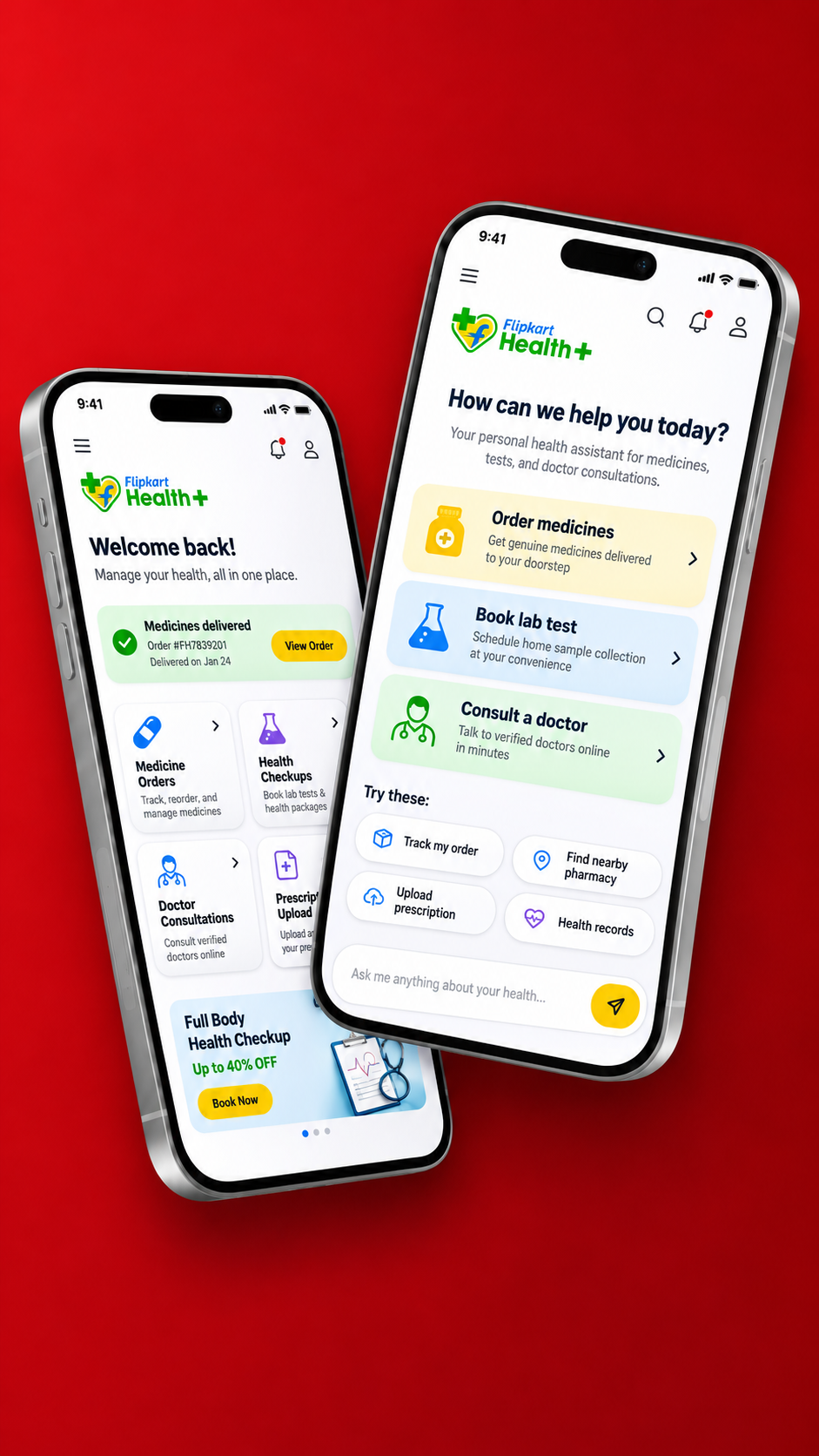
Prismberry partnered with Flipkart Health to modernize its legacy healthcare eCommerce platform, addressing scalability limitations, complex maintenance, and slow feature development. By transitioning from a monolithic application to a microservices-based architecture and adopting event-driven workflows, Prismberry helped build a more flexible, scalable, and cost-efficient technology foundation designed to support growing business demands.
Reducing reliance on proprietary technologies, particularly through the database migration, helped lower costs and improve technology expenditure efficiency.
The adoption of event-driven workflows significantly reduced response times, enabling faster application interactions and improving the user experience.
The microservices-based architecture enabled the platform to handle a substantial increase in user traffic more effectively, supporting growing demand.
Modular services simplified application maintenance and made it easier to develop and introduce new features.
The modernized technology stack reduced dependence on proprietary systems and established a more adaptable foundation for future enhancements.
Flipkart Health's existing healthcare eCommerce platform relied on a monolithic architecture that made application maintenance complex and new feature development time-consuming. As business demands and user traffic increased, the system faced challenges in scaling efficiently, managing growing workloads, and delivering updates quickly.
Prismberry deployed a dedicated team of ten professionals over nine months to modernize the platform's architecture, improve scalability, and reduce dependence on proprietary technologies.
Prismberry decomposed the monolithic application into microservices, enabling a more modular architecture. This approach improved flexibility, simplified maintenance, and allowed individual components to evolve more independently.
Synchronous workflows were decoupled through an event-driven approach. MySQL Change Data Capture (CDC) and Google Pub/Sub enabled event-based communication and supported more efficient data processing, contributing to significantly faster response times.
The platform's database was migrated from SQL Server to MySQL, reducing dependence on proprietary database technology and helping lower software licensing costs.
Prismberry transitioned the application environment from Windows to Debian OS, aligning the platform with the modernized technology stack.
Java and Python supported development across the modernized architecture, providing a flexible foundation for ongoing enhancements and maintenance.
The combination of modular services and event-driven workflows established a more adaptable application architecture, helping the platform accommodate growing traffic and evolving business requirements.
A microservices-based foundation that improves flexibility and simplifies ongoing maintenance.
Event-driven workflows that delivered a 60% reduction in response times.
Reduced dependence on proprietary technologies, contributing to a 40% reduction in costs.
An architecture better equipped to accommodate increasing traffic and growing business demands.
A more adaptable technology foundation that supports continued application enhancements and evolving business needs.
Legacy architecture, growing traffic, and rising maintenance costs can limit your ability to innovate. Prismberry helps businesses modernize applications, adopt scalable architectures, and optimize technology investments to support long-term growth.